Showing posts with label Pharmacology. Show all posts

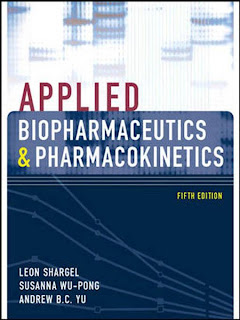
Applied Biopharmaceutics Pharmacokinetics by Leon Shargel Ebook Free Download

Applied Biopharmaceutics Pharmacokinetics by Leon Shargel Ebook Free Download

2 comments
By Unknown

Applied Biopharmaceutics Pharmacokinetics by Leon Shargel Ebook Free Download

Applied Biopharmaceutics Pharmacokinetics by Leon Shargel
Publishers : MC Graw Hill Medical  | 5th Edition | ISBN: 0071375503  892 Pages | PDF | 7 MB  

"Applied Biopharmaceutics and Pharmacokinetics" provides the reader with a basic understanding of the principles of biopharmaceutics and pharmacokinetics as applied to drug product development and drug therapy. The revised and updated fifth edition of this popular text remains unique in teaching the student the basic concepts that may be applied to understanding the complex issues associated with the processes of drug delivery and the essentials of safe and effective drug therapy..

Content
Chapter 1Introduction to Biopharmaceutics and Pharmacokinetics
Chapter 2Mathematical Fundamentals in Pharmacokinetics
Chapter 3One-Compartment Open Model: Intravenous Bolus Administration
Chapter 4Multicompartment Models: Intravenous Bolus Administration
Chapter 5Intravenous Infusion
Chapter 6Drug Elimination and Clearance
Chapter 7Pharmacokinetics of Oral Absorption
Chapter 8Multiple-Dosage Regimens
Chapter 9Nonlinear Pharmacokinetics
Chapter 10Physiologic Drug Distribution and Protein Binding
Chapter 11Drug Elimination and Hepatic Clearance
Chapter 12Pharmacogenetics
Chapter 13Physiologic Factors Related to Drug Absorption
Chapter 14Biopharmaceutic Considerations in Drug Product Design and In Vitro Drug Product Performance
Chapter 15Drug Product Performance, In Vivo: Bioavailability and Bioequivalence
Chapter 16Impact of Drug Product Quality and Biopharmaceutics on Clinical Efficacy
Chapter 17Modified-Release Drug Products
Chapter 18Targeted Drug Delivery Systems and Biotechnological Products
Chapter 19Relationship between Pharmacokinetics and Pharmacodynamics
Chapter 20Application of Pharmacokinetics to Clinical Situations
Chapter 21Dose Adjustment in Renal and Hepatic Disease
Chapter 22Physiologic Pharmacokinetic Models, Mean Residence Time, and Statistical Moment Theory
Appendix A: Statistics
Appendix B: Applications of Computers in Pharmacokinetics
Appendix C: Solutions to Frequently Asked Questions (FAQs) and Learning Questions
Appendix D: Guiding Principles for Human and Animal Research1
Appendix E: Popular Drugs and Pharmacokinetic Parameters

DOWNLOAD

Password: Pharmaever.com


BioPharmaceutics and PharmacoKinetics By BRAHMANKAR Ebook Free Download

BioPharmaceutics and PharmacoKinetics By BRAHMANKAR Ebook Free Download

4 comments
By Unknown


Biopharmaceutics & Pharmacokinetics A Treatise By Brahmankar Dm, Sunil B Jaiswal

Free eBook Download Biopharmaceutics & Pharmacokinetics A Treatise By Brahmankar Dm, Sunil B Jaiswal.


Book: Biopharmaceutics & Pharmacokinetics a Treatise
Author: Brahmankar Dm, Sunil B Jaiswal
ISBN:9788185731476
File Format: PDF 
Publisher: Vallabh Publications Prakashan
Language: English


CONTENTS

Preface
1. Introduction
2. Absorption of Drugs
3. Distribution of Drugs
4. Protein Binding of Drugs
5. BioTransformation of Drugs
6. ProDrugs
7. Excretion of Drugs
8. PharmacoKinetic Drug Interactions
9. PharmacoKinetics: Basic Considerations

10. Compartment Modeling

11. Nonlinear Pharmacokinetics
12. Bioavailability and Bioequivalence
13. Applications of PharmacoKinetic Principles
14. Drug Concentration and Pharmacologic Response
15. Controlled Release Medication

DOWNLOAD

Password: Pharmaever.com

ZIDDU

4SHARED


Pharmacology of Hyperhomocysteinmia.

Pharmacology of Hyperhomocysteinmia.

No comments
By Unknown

·         What is hyperhomocysteinemia ?
        Hyperhomocysteinemia is condition in which homocysteine level is increased due deficiency of vitamin B12 or defect in methyleneterahydrofolate reductase, methionine synthase and cystathionine beta-synthase. Hyperhomocysteinemia is associated with many disease conditions like coronary artery disease, mental retardation, diabetic complications (retinopathy & neuropathy), thrombosis etc.

·         What is homocysteine:-
       it is a natural occurring sulfur containing amino acid mainly derived form dierty sources of methionine. It is closely related to cysteine amino acid. It was first introduced in 1932 by Butz and du Vigneaud and eleveted level of homocysteine in urine was reported in mental retarded children by neil and carson in 1962. Homocysteine level in healthy person is  10-12 μmol/L.
·        
Metabolism of homocysteine :-
       Homocysteine is intermediate product of metheonine metabolism and it is metabolised by two pathway
Re-methylation pathway (which regenerates methionine)
Trans-sulfuration pathway (which degrade homocysteine)

Re-methylation pathway:-
          Remethylation pathway converts homocysteine into methionine by transfering methyl (-CH3) group either by methylcobalamine or betaine. Methylcobalamine receive methyl group from S–adinosylmethionine (SAM) or 5-methyltetrahydrofolate (5-MTHF). SAM is a universal methyl group donor which is associated with many metabolic reaction. SAM is converted into S-adinosylhomocysteine (SAH) to donate methyl group. Under normal metabolic condition 50% of homocysteine remethylated into methionine.

Trans-sulfuration pathway:-
           Trans-sulfuration pathway degrades methionine and homocysteine into cysteine and taurine. Cysteine and taurine is important for cardiac health, hepatic detoxification, cholesterol level etc.
           this pathway is depend on diatery consumption of vitamin Band its conversion into active form. In this pathway homocysteine is converted into cystothionine by enzyme cystathionie beta synthase (CBS) and amino acid serine which is formed from glycine. Futher cystathionie is converted into cysteine by pyridoxal-5-phosphate (P5P) which act as a cofactor.

·         Etiology:-

1.      Genetic defects: - CBS and MTHFR (methyltetrahydrofolate reductase) are two main enzymes involved in the metabolism of homocysteine. Due to heterozygous mutation in both enzymes can lead to elevated level of homocysteine. While homozygous mutation is mainly occurs with MTHFR. Because of mutation in protein become thermolabile and inactivated by heat.

2.      Deficiency of vitamin B6:-  Vit B6 play important role in trans-sulfutation pathway. Due to deficiency in Vit B homocysteine could not converted into cysteine and thus hyperhomocysteinemia can occurs.

3.      Anti-hyperlipidemic drug:-  drug like fibrate and nicotinic acid can elevate homocysteine level by 30%. Fibrate and nicotinic acid act via peroxisome proliferation activated receptor α (PPAR α) which lead to increased in activation of gene involved in metabolism of lipid and fatty acid.

4.      Chronic kidney failure:- chronic kidney failure can increase homocysteine level due to decrease in the excretion and metabolism impairment.

5.      Cigarette smoking: - can also cause hyperhomocysteinemia.

·         Pathophysiology:-
           Hyperhomocysteinemia is associated with number of diseases state which are as following
Ø  Phase II detoxification reaction.
Ø  Heart disease.
Ø  Pregnancy
Ø  Disease of nervous system
Ø  Kidney failure

Phase II detoxification reaction:-  Phase II detoxification reaction involved conjugation of activated metabolite with glutathione, sulfate, glycine etc. but due to high level of homocysteine further pathway of metabolism become impaired & other molecule which are involved in phase II reaction are not synthesised like glutathione (GSH), sulfate, glycine etc. methionine and cysteine is used for cyanide-thiocyanate detoxification.

Heart disease:-  Homocysteine produce hydrogen peroxide by reacting with LDL cholesterol and endothelial cell membrane which catalyze cellular injury. To protect endothelial cell membrane from hydrogen peroxide, EDRF (endothelium derived relaxing factor) released NO and other oxide of nitrogen oxide. NO react with homocysteine and form S-nitrosohomocysteine to protect endothelium form hydrogen peroxide. Increase in homocysteine level will overload protective mechanism and allow damage to endothelium.
            Re-methylation of homocysteine and formation of SAM is necessary for the synthesis of L-argenine, creatinine etc. and trans-sulfuration pathway produced GSH, cysteine, taurine etc. All these nutrient are important for reduction of oxidative stress and treat heart disease. Increase level of homocysteine will decrease level of all above important nutrients which increase the risk for heart disease.

Pregnancy:-  deficiency in folic acid and vit B12 can cause neural tube defects (opening in brain or spinal cord ). Impairment in methylation and homocysteine may cause the NTD( neural tube defect ). It can be prevented by folic acid supplementation.

Disease of nervous system:-  homocysteine has critical impact on number of nervous system disorder including schizophrenia, Parkinson’s disease etc and can be correlated with homocysteine level.
           Methaylation of homocysteine via SAM also include methylation of DNA and myelin, are very important for CNS. Due to defect in enzyme methionine synthase, complication of deficiency of vit B12 are occurs. Alternative pathway for remathylation is not present in nervous system so defect in MS complications of nervous system can occurs.
           Homocysteine is found to be a neurotoxin in condition where glycin level is increased. Increased level of homocysteine bind with NMDA receptor and facilitate the entery of Ca+ ion, which produced free redicals in neurons and causes neurotoxicity. It was found that patient with Alzheimer’s disease has high level of homocysteine. Methylation reaction is very vital for the methylation of mylien sheath, but high level of homocysteine can defect the methylation reaction and can cause the condition called as subacute combine degeneration of spinal cord (SCD).

Kidney failure:-   because homocysteine is cleared by kidney, kidney failure can cause the increased level of homocysteine. Homocysteine level in kidney failure is  26 ± 1.5 µmol/L. in kidney failure increased homocysteine level causes endothelial defects and due to this auto-oxidation of homocysteine is occurs and thus bioavailability of nitric oxide is reduced. increased level of homocysteine causes accumulation of inhibitor of NO synthase is occurs.

·         Symptoms:-
In general, high homocysteine does not cause symptoms until and unless one of the diseases with which it is associated, appears. Extremely high homocysteine can cause blood clots, rapid bone loss, and in children mental retardation.

·         Treatment:-
The best way to prevent hyperhomocysteinemia is to eat foods which contain B6, B12, and folate such as potato, greens, beans and fish. Supplementation with pyridoxine, folic acid, B12, or betaine reduces the concentration of homocysteine in the bloodstream. N-acetyl-cysteine (NAC) has shown the ability to significantly reduce homocysteine levels. It is belived that N-acetyl-cysteine  displace homocysteine form the blood stream and allow formation of cysteine.
·         

Pharmacology Of Pheocromocytoma

Pharmacology Of Pheocromocytoma

No comments
By Unknown

Ø Pheochromocytoma:    
                A pheocromocytoma is a rare, usually benign tumor that develops most commonly in the core of an adrenal gland. Tumors that occur outside of the adrenl gland are referred as paragangliomas.
                Generally 80% of pheochromocytomas are located in the adrenal medulla. Extraadrenal sympathetic paragangliomas commonaly located in the abdomen. Extra- adrenal parasympathetic paragangliomas are most commonly found in the neck and head.
                 A pheochromocytomas cause adrenal glands to produce too much of  hormones, raising blood pressure and heart rate. it may be life-threatening if unrecognized or untreated.
                A pheochromocytoma can develop at any age, but most commonly occurs in middle age. Usually, treatment for pheochromocytoma can return blood pressure to normal.
                Sometimes pheochromocytoma is part of another condition called multiple endocrine neoplasia syndrome (MEN).
Ø Signs and Symptoms:
  • High blood pressure
  • Rapid heart rate
  • Forceful heartbeat
  • Excessive sweating
  • Abdominal pain
  • Sudden-onset headaches — usually severe — of varying duration
  • Anxiety
  • Feeling of extreme fright
  • Pale skin
  • Weight loss
  • Amyloid deposits found microscopically
  • Elevated blood glucose level

o   These signs and symptoms develop because this type of tumor produces an excess of chemical compounds called catecholamines.

o   Excessive secretion of catecholamines — the hormones adrenaline and noradrenaline lead to high blood pressure.  High blood pressure is a common sign of a pheochromocytoma.

o   Elevated blood glucose level arise due to cateholamines which stimute lipolysis which leads to high levels of free fatty acids that cause inhibition of glucose uptake by muscle cells. Further, stimulation of beta-adrenergic receptors leads to glycogenolysis and gluconeogenesis and thus elevation of blood glucose levels.

o   Not all patients experience all of the signs and symptoms listed. The most common symptoms are headache, excessive sweating, and increased heart rate, with the attack subsiding in less than one hour.

Ø Causes:
·          Up to 25% of pheochromocytomas may be familial. Hereditary conditions associated with pheochromocytomas include
 Multiple endocrine neoplasia 2A and 2B(MEN IIA,MEN IIB),
 Von Hippel–Lindau disease(VHL),
 Neurofibromatosis I(NF-1),
 RET Oncogene,
 SDHB,
 SDHC and
 SDHD

Ø Diagnosis:
·         The diagnosis can be done by measuring catecholamines and metanephrines in blood or through a 24-hour urine collection. Imaging by computed tomography or a T2 weighted MRI of the head, neck, and chest, and abdomen can help localize the tumor.

·         Blood and urine tests:- These tests can measure elevated levels of the hormones adrenaline and noradrenaline and their breakdown products (metanephrines). It need to collect urine samples over a 24-hour period for testing. The increased level of this metabolites in blood or inceased excretion of these metabolites is indicative of the disease, but does not completely rule out other diseases which may cause the same excretion values.

·         Imaging scans. A CT scan of your abdomen can detect the tumor in most cases. However, it may be necessary to scan other areas of body, such as neck, chest and pelvis. Scanning with other diagnostic imaging techniques, such as magnetic resonance imaging (MRI), a metaiodobenzylguanidine (MIBG) scan or a positron emission tomography (PET) scan, may be done to detect the tumor.


Ø Treatment:-
                Surgery is the treatment of first choice.  It is important to stabilize blood pressure and pulse with medication before surgery.  When the tumor cannot be surgically removed, medication is needed to manage it. This usually requires a combination of medications to control the effects of the excessive hormones.
v  Medications used to treat high blood pressure associated with pheochromocytomas include:
§  Alpha blockers. Alpha blockers  is used to block noradrenaline activity. They work by keeping the hormone noradrenaline from stimulating the muscles in the walls of smaller arteries and veins. This stimulation makes the vessel walls constrict. Blocking that effect causes the vessels to remain open and relaxed. This improves blood flow and lowers blood pressure.
o   Drugs: phenoxybenzamine, doxazosin, prazosin and terazosin.
o    Side effects: headache, pounding heartbeat, nausea and weight gain.
§  Beta blockers. Beta blockers make heart beat more slowly and with less force. They work by blocking the effects of the hormone norepinephrine. This action slows down the nerve impulses that travel through heart. That means heart doesn't pump as hard because it needs less oxygen and blood. Beta blockers also slow down the release of the enzyme renin from kidneys, helping keep blood vessels dilated.
o   Drugs: atenolol, metoprolol and propranolol .
o    Side effects: fatigue, headache, upset stomach and dizziness.
§  Calcium channel blockers. Calcium channel blockers  relax and widen blood vessels in arteries. They lower blood pressure by preventing calcium from entering the cells of heart and blood vessel walls.
o   Drugs: amlodipine, diltiazem and nicardipine.
o    Side effects: constipation, headache, tachycardia and drowsiness.
§  Metyrosine. This drug lowers blood pressure by inhibiting the production of catecholamines. It may be used when other drugs haven't worked or with other drugs.
o    Side effects: drowsiness, depression, anxiety and diarrhea.
v Surgery:
90% of patients are cured by surgery. Surgery for tumors is usually done by laparoscopy. Once the tumor is removed, blood pressure usually falls to normal or low normal. Patients who have blood pressure that stays too low, or who have poor circulation in the arms and feet, may need transfusions of blood, plasma, or other fluids. After surgery, some patients have a fall in blood pressure followed by a rise in blood pressure. Sometimes surgery is not an option because of the type of tumor growth or because the tumor spreads (metastasizes) to other parts of the patient's body.

v  Malignant tumors:
Current treatments for malignant tumors include chemotherapy, or radioactive MIBG. For patients in whom surgery is not successful, or for those who cannot undergo surgery, symptoms are controlled with medications.

Drug Discovery and Evaluation Pharmacological Assays by H. GERHARD VOGEL, ebook free download

Drug Discovery and Evaluation Pharmacological Assays by H. GERHARD VOGEL, ebook free download

No comments
By Unknown

Drug Discovery and Evaluation Pharmacological Assays by H. GERHARD VOGEL


The rapid progress in biology will continue to change the methodological approach to drug discovery in the coming years. Electronic media will continuously help researchers to access and share information. It is, however, becoming more and more evident that many young pharmacologists have only limited training in classical pharmacological methodologies. These long-standing and still highly relevant methods are simply not available in the electronic databases. Drug Discovery and Evaluation:Pharmacological Assays bridges this gap by comprehensively covering the pharmacological methods that have been utilized successfully for more than a hundred years as well as the latest technologies.

The classical methods and the newest technologies, all in one book!

The 3rd edition of this successful reference book contains an updated selection of the most frequently used assays for reliably detecting the pharmacological effects of potential drugs. Effects covered include cardiovascular, analgesic, endocrine, psychotropic, respiratory, renal, and immunomodulatory activities. Each of the more than 1000 assays comprises a detailed protocol outlining the purpose and rationale of the method, a critical assessment of the results and their pharmacological and clinical relevance. In addition, animal models of rare diseases are described.

For this third edition, all existing chapters have been revised and completely updated. A large number of assays were added: we are now publishing two volumes. Sections that have been specifically enlarged include - Pharmacological assays in thrombosis and haemostasis (formerly called activity of blood constituents), - Antidiabetic activity (includes completely new chapters such as Biochemical Methods in Diabetology), - Anti-atherosclerotic activity.


DOWNLOAD,

ZIDDU

MEDIAFIRE

DIPIRO - PHARMACOTHERAPY A PATHOPHYSIOLOGICAL APPROCH, SVENTH EDITION, EBOOK FREE DOWNLOAD

DIPIRO - PHARMACOTHERAPY A PATHOPHYSIOLOGICAL APPROCH, SVENTH EDITION, EBOOK FREE DOWNLOAD

No comments
By Unknown

Pharmacotherapy: A Pathophysiologic Approach, 7th EditionJoseph DiPiro, Robert L. Talbert, Gary Yee, Gary Matzke, Barbara Wells, L. Michael Posey


The most comprehensive, widely used, and evidence-based pharmacotherapy available
A Doody’s Core Title ESSENTIAL PURCHASE for 2011!
5 STAR DOODYS’S REVIEW!
“This is a gold standard reference in pharmacy and the information it provides equips readers with the knowledge base and confidence to provide the highest quality of patient care.”–Doody’s Review Service
Hailed Doody’s Review Service as “one of the best in pharmacy” Pharmacotherapy: A Pathophysiologic Approach is unmatched in its ability to help students develop a mastery of evidence-based medicine for optimum patient outcomes. The eighth edition will feature the addition of SI units throughout and an increased number of global examples and clinical questions.
Features
* Unparalleled guidance in the development of pharmaceutical care plans
* -color presentation
* Key Concepts in each chapter
* Critical Presentation boxes summarize common disease signs and symptoms
* Clinical Controversies boxes examin complicated issues you face when providing drug therapy
* NEW material added to the online learning center
* EXPANDED evidence-based recommendations
* EXPANDED coverage of timely issues such as palliative care and pain medicine
* Therapeutic recommendations in each disease-specific chapter
DOWNLOAD,

About the Author

Lorem ipsum dolor sit amet, consectetur adipiscing elit. Pellentesque volutpat volutpat nibh nec posuere. Donec auctor arcut pretium consequat.

Proudly Powered by HiReN.